
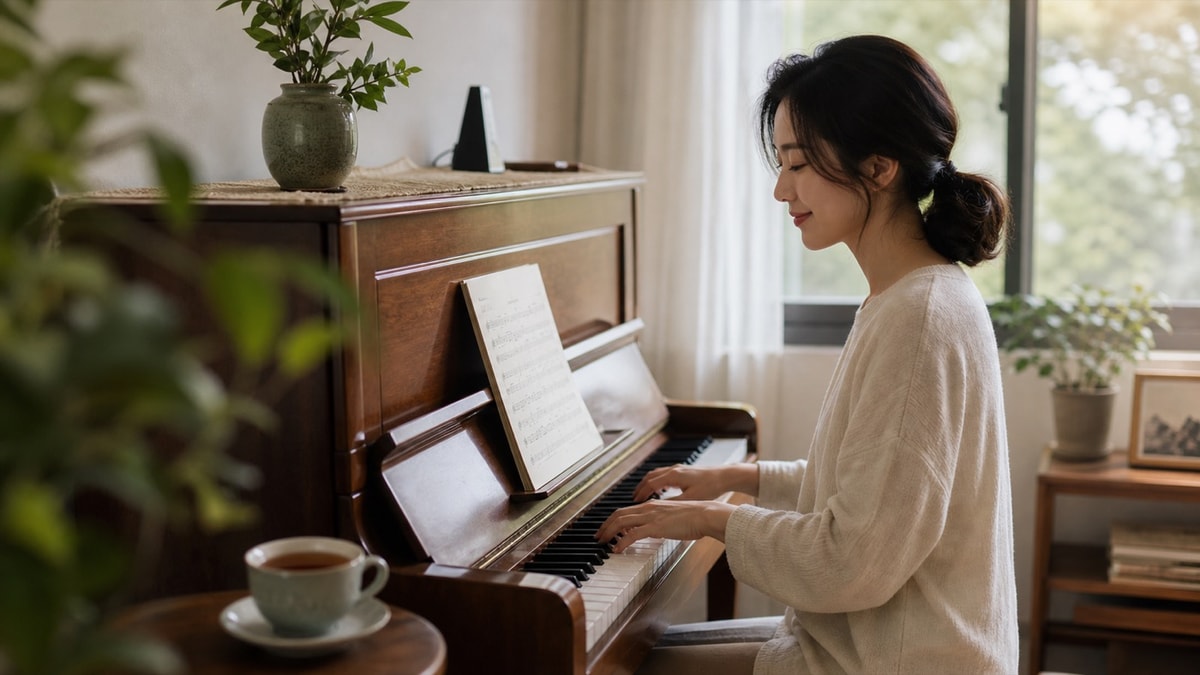

15-Minute Piano Practice for Stress Relief
A piano session does not need to be long to be meaningful. For busy beginners, 15 focused minutes can calm the mind, build consistency, and keep the hands improving without turning practice into pressure.
Why piano can help you slow down
When you play piano, you listen closely, control your breathing, follow rhythm, and feel small movements in your hands. These details pull attention back to the present moment.
Repeated sound gives the mind one clear thing to follow.
Steady rhythm creates a grounded feeling in the body.
Relaxed hand movement can release tension in the shoulders and wrists.
The 15-minute routine
First 3 minutes: breathe slowly, sit tall, and play five simple notes with the right hand.
Next 5 minutes: practice an easy chord loop such as C, Am, F, G.
Next 5 minutes: play a short melody you enjoy.
Final 2 minutes: replay the best phrase softly without trying to fix every mistake.
Keep the goal gentle
Do not turn a relaxing practice session into a test. If today feels slow, stay slow. If you make a mistake, pause, breathe out, and continue.
A small beginner exercise
Choose one major chord, hold the pedal lightly, and play the notes from low to high. Listen until the sound fades. This improves tone control and helps you listen more deeply.
Final takeaway
Fifteen minutes of piano each day is not only technical practice. It can be a structured pause that reduces stress and helps you return to work with a clearer mind.