
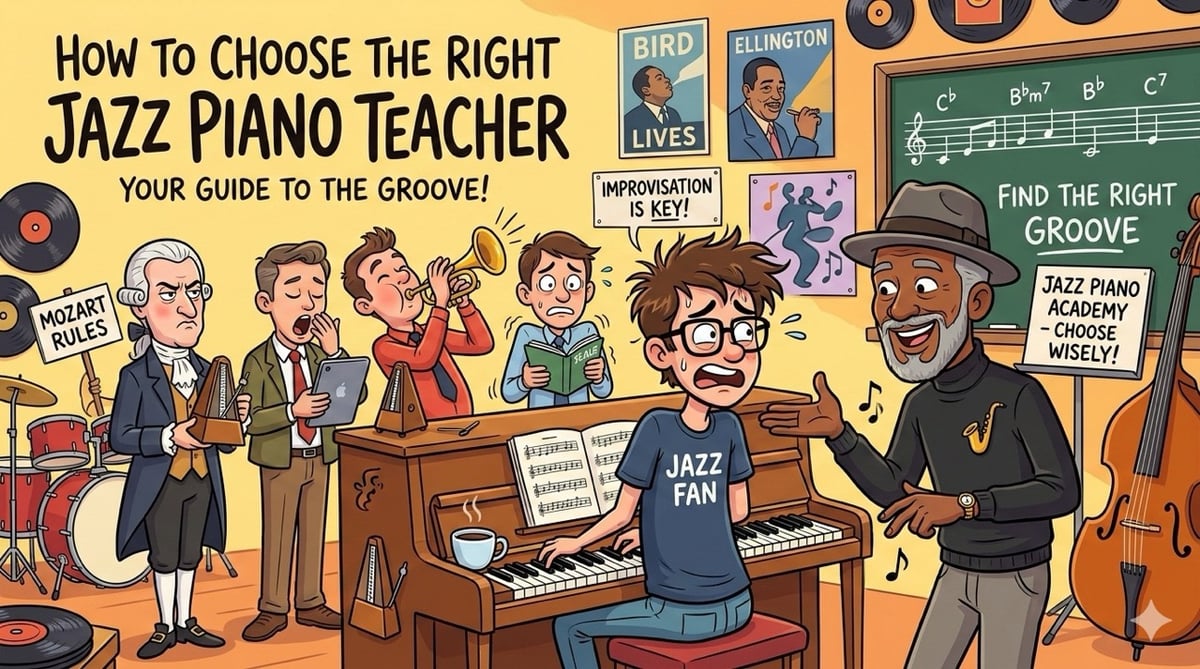

So, you've been bitten by the jazz bug, and you're ready to dive into the wonderful world of jazz piano. That's fantastic! But here's the thing: while any good piano teacher can help with basics, navigating the unique landscape of jazz—its harmonies, rhythms, and improvisational spirit—often requires a specific kind of guide. Choosing the right jazz piano teacher can make all the difference between a frustrating journey and an inspiring one. Let's explore how to find your perfect mentor.
Why a Specialized Jazz Teacher Matters
You might be thinking, "Can't my regular piano teacher teach me jazz?" While some classical teachers have a broad musical background, jazz piano is a distinct language. It involves:
Improvisation: Learning to create music on the spot, not just read it.
Advanced Harmony: Understanding complex chords, voicings, and progressions that are standard in jazz.
Rhythm and Swing: Developing a nuanced sense of time and groove.
Ear Training: Hearing changes, melodies, and rhythms to play by ear.
Repertoire: Familiarity with jazz standards, composers, and historical styles.
A dedicated jazz teacher will have lived and breathed this music, ready to share its secrets with you.
Key Qualities to Look for in a Jazz Piano Teacher
1. Their Playing Style and Specialization
Just like there are many styles of classical music, there are countless sub-genres in jazz (bebop, swing, blues, Latin, fusion, modern, etc.). Listen to your potential teacher play! Do they embody the kind of jazz you want to learn? Do they have a deep understanding of the specific styles that excite you?
Practical Tip: Ask if they have recordings of themselves playing, or if you can attend one of their gigs.
2. Their Teaching Philosophy and Approach
A great player isn't always a great teacher. How do they structure their lessons? Do they balance theory with practical application? Do they encourage improvisation early on? A good jazz teacher will likely:
Focus on ear training alongside sheet music.
Break down complex concepts into manageable steps.
Emphasize listening to jazz as much as playing it.
Guide you through transcription (learning solos by ear).
Encourage creativity and experimentation.
Avoid teachers who stick rigidly to one method book without adapting to your needs and goals.
3. Experience and Credentials (as a Teacher!)
While a music degree or performance experience is a plus, look for someone with proven teaching experience, especially with students at your level. They should understand common beginner struggles and know how to guide you through them. Don't be afraid to ask:
How long have you been teaching jazz piano?
What age groups/skill levels do you typically teach?
What's your typical lesson structure for a student like me?
4. Communication and Personality Fit
Learning an instrument is a personal journey. You'll be spending a lot of time with this person, so a good rapport is essential. Do you feel comfortable asking questions? Are they patient and encouraging? Do they inspire you? Trust your gut feeling during an initial conversation or trial lesson.
5. Accessibility and Logistics
Practical considerations are important too:
Location: Is their studio convenient for you? (Or are they good with online lessons?)
Availability: Do their open slots match your schedule?
Rates: Do their fees fit your budget? (Remember, quality often comes at a fair price).
Steps to Finding Your Jazz Piano Teacher
Ask for Recommendations: Talk to local musicians, music school students, or fellow jazz enthusiasts. Word-of-mouth is powerful.
Online Search: Websites like "Music Teachers National Association (MTNA)" (in the US), "Associated Board of the Royal Schools of Music (ABRSM)" (UK), or local music school directories often list qualified teachers. Google "jazz piano teacher [your city]".
Attend Local Jazz Events: Go to jam sessions or local club performances. If you hear a pianist you admire, approach them respectfully and ask if they teach.
The "Interview" / Trial Lesson: This is crucial! Most teachers offer a trial lesson or a free consultation. Treat this as an interview where you also get to experience their teaching style.
Common Mistakes to Avoid
Settling Too Soon: Don't just pick the first teacher you find. Do your research and try a few consultations if possible.
Not Clarifying Your Goals: Be clear about what you want to achieve. Do you want to learn to improvise over standards? Play solo jazz piano? Join a band? Share this with potential teachers.
Ignoring Your Gut Feeling: If something feels off, it probably is. A good teacher-student relationship is built on mutual respect and understanding.
Your First Step: Prepare Your Goals
Concrete Practice Tip: Before your trial lesson or initial chat, sit down and write a short list of your top 3-5 goals for learning jazz piano. Do you want to learn specific songs? Understand jazz theory better? Improve your improvisation? Being clear about your aspirations will help both you and the potential teacher determine if they are the right fit for your journey.
Ready to Find Your Jazz Guide?
Finding the right jazz piano teacher is an investment in yourself and your musical future. Take your time, ask the right questions, and trust your instincts. With the right mentor by your side, the rich, improvisational world of jazz piano will open up to you in ways you never imagined. Happy practicing!