
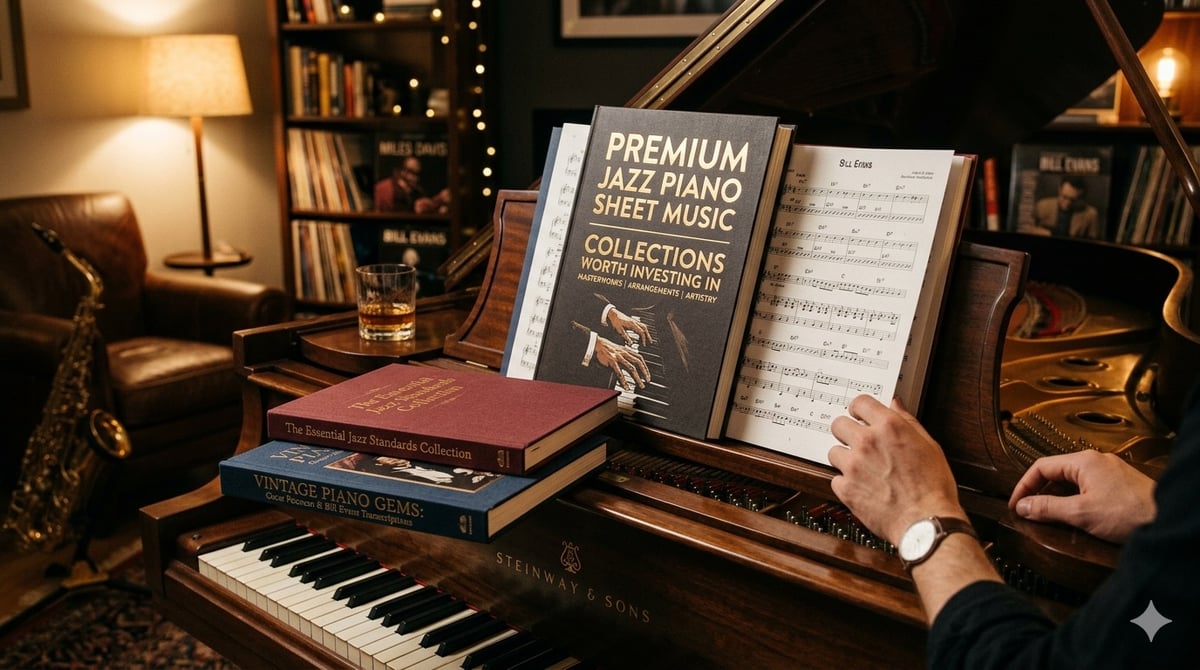

As a piano learner, you've probably heard that jazz is all about improvisation, playing by ear, and understanding complex theory. While all of that is true, a huge part of learning jazz, especially on the piano, comes from studying what the masters played. And the best way to do that? Through carefully curated, high-quality sheet music collections.
Think of these collections not just as books of notes, but as masterclasses in print. They provide the voicings, the arrangements, and the melodic lines that define the genre. For a self-taught musician or someone looking to expand beyond classical, investing in the right jazz piano sheet music can be a game-changer. Let's explore some premium collections that are truly worth your time and investment.
What Makes a Jazz Sheet Music Collection "Premium"?
Before we dive into specific recommendations, let's clarify what makes a collection stand out:
Accuracy: Are the transcriptions faithful to the original recordings?
Pedagogical Value: Does it help you learn jazz concepts, voicings, and improvisation techniques?
Arrangement Quality: Are the arrangements playable and inspiring for your skill level?
Versatility: Does it offer variety in styles, tempos, and difficulty?
Supporting Materials: Do some collections come with backing tracks or explanatory notes?
Top Jazz Piano Sheet Music Collections to Elevate Your Playing
1. The Real Book (Hal Leonard, 6th Edition)
Okay, let's get this classic out of the way first. While not a "piano collection" in the traditional sense, The Real Book is the undisputed bible for jazz musicians. It's a collection of lead sheets – melodies and chord symbols – for hundreds of jazz standards. It's available in C, Bb, and Eb editions to suit different instruments. While it doesn't give you full piano arrangements, it's absolutely essential for:
Learning melodies: You'll learn the primary melodies of countless tunes.
Understanding chord changes: This is where you learn the harmonic progressions of jazz standards.
Developing your own voicings and improvisation: The Real Book forces you to engage with the music creatively.
Practical Tip: Don't just play the melody and chords as written. Experiment! Try different chord voicings in your left hand. Use the melody as a starting point for simple improvisations over the given chord changes. This is where you start to *think* like a jazz pianist.
Common Mistake: Many beginners just play the melody and root position chords. The real learning comes from experimenting with different jazz voicings (shells, 3-7 voicings, drop 2 voicings) and creating your own accompaniment patterns.
2. Hal Leonard Jazz Play-Along Series
This series is fantastic for putting your knowledge into practice. Each volume focuses on a specific artist (e.g., Miles Davis, Bill Evans, Oscar Peterson) or theme (e.g., "Swing Classics," "Jazz Ballads") and comes with a CD or download code for backing tracks. You get lead sheets for the tunes, just like in The Real Book, but the backing tracks provide a full rhythm section (bass, drums, often guitar/piano comping) for you to play along with.
Instant Band Experience: Practice with a professional rhythm section in your living room!
Improvisation Practice: A perfect tool for developing your soloing over authentic changes.
Timing and Feel: Playing with a track significantly improves your rhythm and internal clock.
Look for volumes that feature piano legends to get a taste of their repertoire.
3. Jazz Piano Solos Series (Hal Leonard)
Unlike The Real Book, this series provides full, well-arranged piano solo transcriptions of jazz standards. These aren't just lead sheets; they are complete, playable arrangements for solo piano, often in an intermediate to advanced-intermediate style.
Full Arrangements: Learn how to play jazz standards as complete piano pieces.
Voice Leading Insights: Discover how professional arrangers handle harmony and melody together.
Repertoire Building: A great way to build a solid repertoire of beautiful jazz solo pieces.
These books are excellent for seeing how jazz piano sounds when performed by a single instrument, incorporating melody, harmony, and bass lines.
4. Artist-Specific Transcriptions (e.g., Bill Evans, Oscar Peterson, Art Tatum)
Once you have a grasp of basic jazz harmony and improvisation, diving into artist-specific transcription books can be incredibly enlightening. Publishers like Hal Leonard and Sher Music often release books dedicated to the playing style of a single jazz piano master.
Deep Dive into Style: Understand the nuances, voicings, and improvisational language of a specific legend.
Advanced Techniques: Often includes complex rhythms, voicings, and melodic ideas.
Historical Context: Connects you directly to the innovations of jazz history.
Be aware that these can be challenging, but the rewards are immense. Start with easier transcriptions or focus on specific phrases and voicings rather than trying to master an entire piece at once.
Making Your Investment Count: A Practice Tip
No matter which collection you choose, remember that the sheet music is just the beginning. Your most important practice tip is to listen actively while you read. Find recordings of the tunes you're learning. Listen to multiple versions by different artists. Notice how they interpret the melody, how they voice the chords, and how they improvise. Then, go back to your sheet music and try to incorporate some of those ideas into your own playing. The goal isn't just to play the notes correctly, but to play them with *jazz feel* and understanding.
Ready to Invest in Your Jazz Journey?
These premium jazz piano sheet music collections offer a structured path to understanding and playing jazz. They bridge the gap between abstract theory and real-world performance, providing invaluable resources for any aspiring jazz pianist. Pick a collection that resonates with your current interests and skill level, and get ready to unlock a whole new world of musical expression at the piano!