
Piano Placement, Care, and Moving
Updated: 2026-07-12After this lesson, you will be able to audit a piano location for stable conditions, follow a conservative surface-care routine, identify work for a qualified piano technician, and hand every acoustic-piano move to a professional piano mover with appropriate equipment.
Try now
Without shifting the piano, look for direct sun, heating or cooling airflow, dampness, drafts, drinks, and plants. Mark each item “clear,” “needs professional advice,” or “remove from surface.” Do not begin a move or open the instrument.
Place for steadier conditions
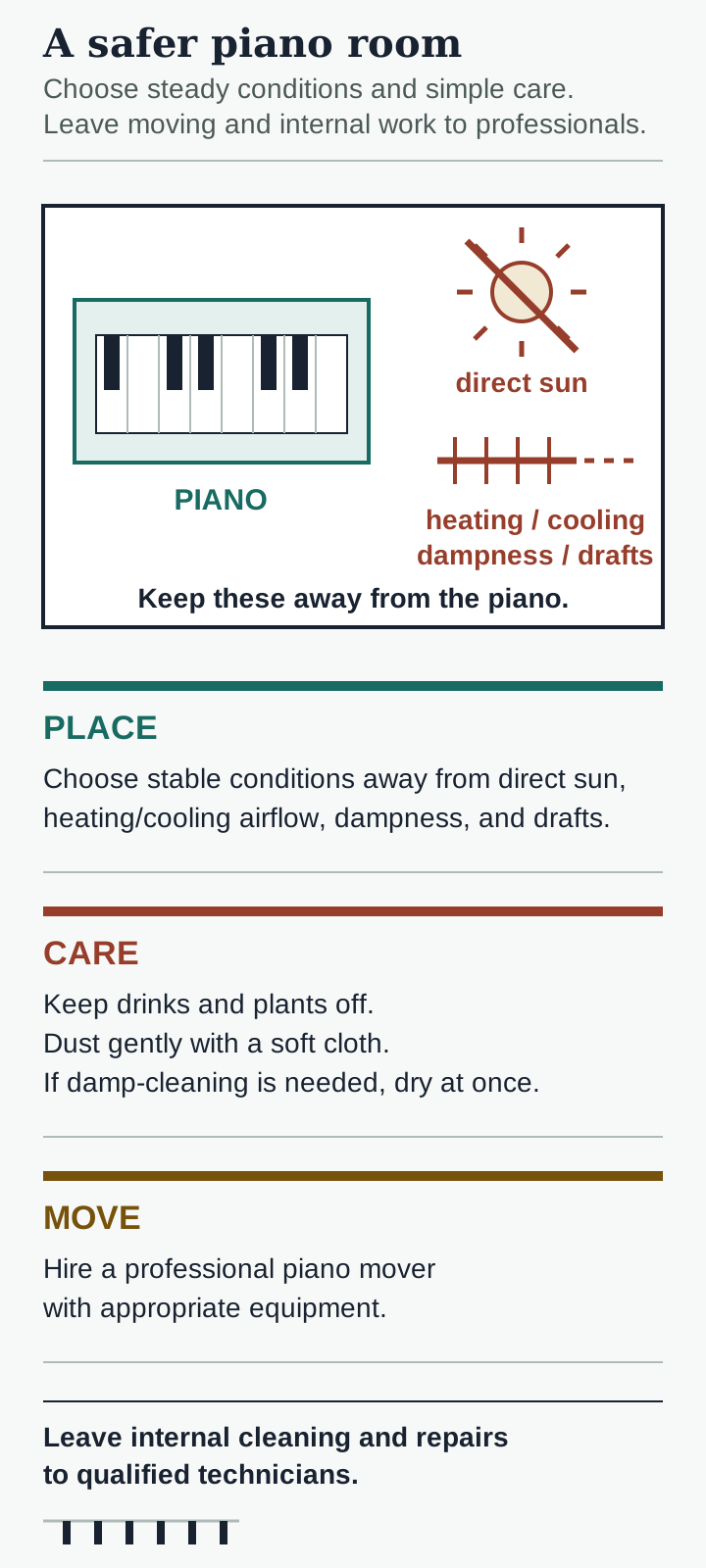
The Piano Technicians Guild recommends fairly even room conditions and locating an acoustic piano away from direct sunlight, heating or air-conditioning vents, frequently opened windows or outside doors, dampness, and drafts. The purpose of this lesson is a conservative placement screen, not a room-engineering calculation. It sets no fixed environmental target or guarantee for a particular building.
Observe the location at different parts of the day before changing it. Direct sun may only reach the case for a short period; conditioned airflow may cycle. Write the source, when it appears, and whom to ask. If the piano’s location needs to change, stop at the audit and contact a professional piano mover rather than testing a DIY route.
Keep surface care small and documented
Keep drinks and plants off the piano. For ordinary dust, Yamaha and PTG support gentle use of a soft cloth; PTG describes a thoroughly wrung soft damp cloth followed immediately by a dry cloth for suitable finish care. Check the piano maker’s instructions before applying any product because finishes differ. Never spray or apply an unapproved cleaner as a generic solution.
Use separate clean cloths for keys and case when the maker directs it. If a mark does not lift with the approved gentle method, stop. Delicate internal parts should be cleaned by a qualified technician. Tuning, regulation, voicing, repair, and internal cleaning are not extensions of the learner’s dusting routine.
| Area | Owner action | Professional boundary |
|---|---|---|
| Location | Observe sun, airflow, dampness, and drafts | Advise on relocation or instrument condition |
| Surface | Keep liquids/plants off; dust gently per maker guidance | Treat damage or uncertain finish issues |
| Interior/action | Leave closed and report symptoms | Qualified technician inspects and services |
| Moving | State destination and schedule | Professional piano mover plans and performs the move |
Moving is a specialist job
PTG says to use a professional piano mover, and Steinway’s guide specifies professional movers with the equipment necessary for the instrument. The mover determines methods and site-specific procedures from the instrument, building, access, and local service conditions; this lesson provides no DIY moving procedure.
When requesting service, provide the piano type and model if known, current and destination locations, access facts requested by the mover, date window, and any visible condition concern. Ask the mover what information they need and what is included. For service, describe the symptom rather than attempting an internal fix.
Exercise
Complete a one-page care record. List the current location observations, items removed from the top, maker-approved surface method, last known qualified service if available, and contact slots for a technician and professional piano mover. Add two boundaries in large type: no internal DIY work and no DIY acoustic-piano move. The deliverable is the audit and contact plan, not a moved instrument.
Common mistakes
- Symptom: A precise humidity target is copied without context. Correction: Record observed instability and ask the maker or qualified technician; this lesson sets no percentage.
- Symptom: One cleaner is assumed safe for every finish. Correction: Follow model/maker guidance and stop when the finish is uncertain.
- Symptom: Dusting expands into internal cleaning. Correction: Leave the interior closed for a qualified technician.
- Symptom: A short move is treated as a DIY task. Correction: Use a professional piano mover with appropriate equipment for every acoustic-piano move.
Practice pack
Prepare
Find the maker guidance, a soft clean cloth, and a blank care record.
Core drills
Audit location and surface, remove liquids or plants, and document professional contacts.
Variations
Repeat the observation at another time of day without moving or opening the piano.
Self-check
Pass when every action is either conservative owner care or clearly assigned to a professional.
5-minute route
Spend two minutes location, one surface, one maker guidance, and one updating contacts.
15-minute route
Spend five minutes room observation, four on care guidance, and six completing the service/moving record.
Frequently asked questions
What fixed environmental target should I maintain? This lesson does not prescribe one. Ask the piano maker or a qualified technician about your instrument and location.
Can I move an upright across the room myself? No DIY moving instructions are provided. Engage a professional piano mover, even for an apparently short move.
Should I clean inside when dust is visible? No. Delicate internal cleaning and repair belong to a qualified technician.
Ready to continue when
- The location audit covers direct sun, heating/cooling airflow, dampness, and drafts.
- Drinks and plants are off the piano, and surface care follows maker guidance.
- Internal cleaning, tuning, regulation, voicing, and repairs are assigned to a qualified technician.
- Every acoustic-piano move is assigned to a professional piano mover with appropriate equipment.