
Solo, Band, and Ensemble Opportunities
Updated: 2026-07-12After this lesson, you will be able to distinguish what a pianist carries, hears, and leaves in solo, band, and ensemble settings, then choose one realistic opportunity using a personal readiness, repertoire, communication, and logistics checklist.
Try now
Choose one eight-measure piece you already play. Describe it three ways: what both hands must carry when alone; what you would remove beside bass and drums; and what you must listen for when sharing time and phrasing with a mixed ensemble. Use one sentence for carry, hear, and leave.
One pianist, three different jobs
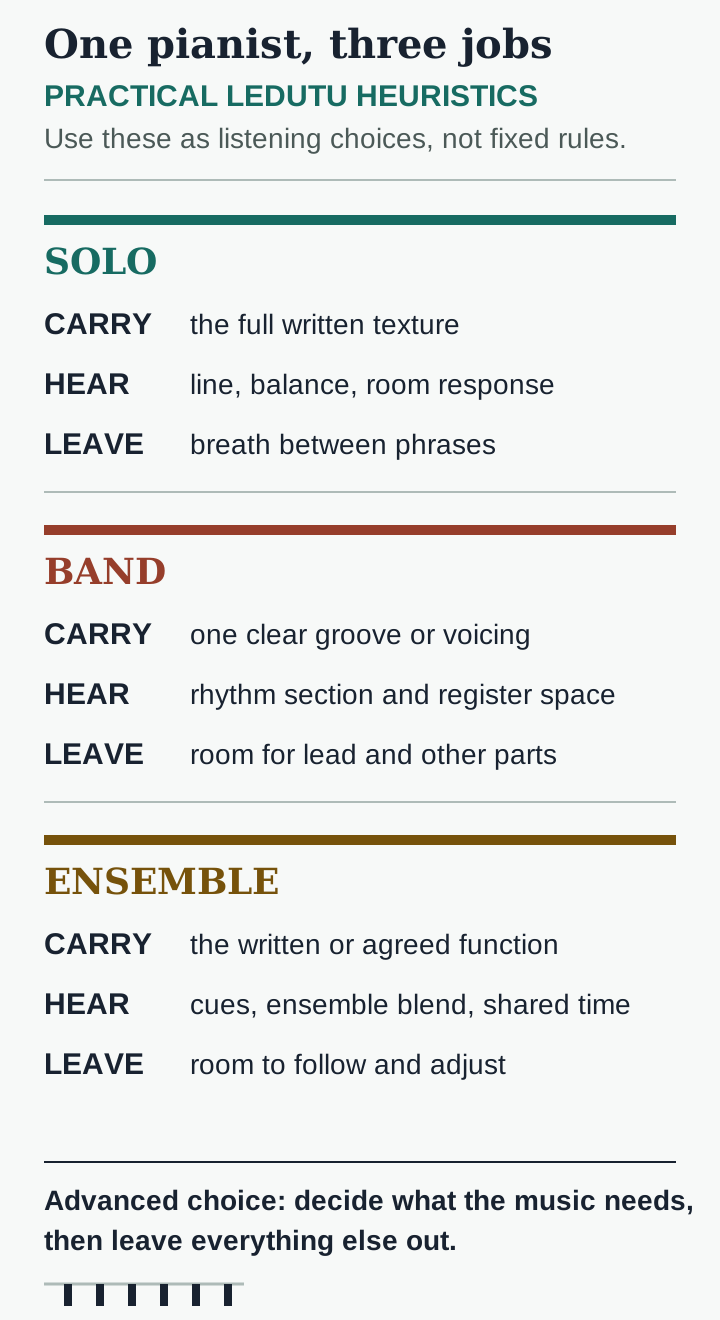
In solo playing, the pianist may carry melody, harmony, bass, pulse, form, and the complete dynamic arc. “Leave” still matters: silence between phrases and uncluttered register keep the arrangement readable. In a band, piano becomes one part of a rhythm section. Hear bass and drums, choose register and rhythm that support the arrangement, and remove left-hand or middle-register density when it competes.
In a mixed ensemble or accompanying role, follow shared tempo, phrasing, articulation, and cues. Berklee describes accompanists as supporting and collaborating with other performers. Its rhythm-section course emphasizes critical listening and instrumental roles, while its keyboard course emphasizes voicings, rhythms, and registers that support clarity and momentum. The carry/hear/leave grid is Ledutu’s editorial application of those broader principles.
| Setting | Carry | Hear | Leave |
|---|---|---|---|
| Solo | Complete form, bass/harmony, melody, and ending | Your inner pulse, balance, decay | Phrase space and unoccupied register |
| Band | Assigned groove, harmony, cue, or texture | Bass, drums, lead line, arrangement changes | Register and attacks already covered |
| Ensemble | Written or agreed part and shared entrances | Blend, shared time, phrasing, leader cues | Space for other voices and releases |
Match the opportunity to current evidence
An opportunity is useful when its demands are explicit. A solo community event might require one self-contained piece and a reliable entrance/ending. A band rehearsal might require a chart, exact sounds or piano role, and the ability to repeat sections from verbal cues. An ensemble, choir, class, or accompaniment setting may require reading, following a leader, and adjusting balance immediately.
Do not volunteer a skill that has not been tested. Use a recording, rehearsal with another person, or a clean reading pass as evidence. Ask about date, rehearsal count, instrument, music format, program length, role, and who makes arrangement decisions. For repertoire, use Ledutu originals, public-domain material, or music the organizer has authorized; this lesson supplies no commercial tune.
Build a personal opportunity checklist
Mark ready, needs one test, or not for this event beside each item:
- I can state whether the role is solo, band keyboard, ensemble part, or accompaniment.
- I have the exact score, chart, or original arrangement and know its form.
- I can start from rehearsal landmarks and continue after a small error.
- I know what musical layer I carry and what register or activity I should leave.
- I can follow count-ins, endings, repeats, cuts, and leader cues.
- I can attend the required rehearsals and arrive with the requested materials.
- I have confirmed the available instrument and only the model-specific features my part needs.
- I can provide one current recording or rehearsal example at the required level.
- I have a contact, date, location, duration, and clear next action.
The checklist is personal, not a ranking of prestigious settings. One small, well-defined commitment is stronger evidence than several vague possibilities.
Application
Create a three-row opportunity shortlist: one solo setting, one band or rhythm-section rehearsal, and one ensemble/accompaniment setting available through your existing community. For each, write role, repertoire source, required evidence, rehearsal commitment, instrument assumption, contact, and next action. Score the nine checklist items. Choose only the row with the clearest fit and send a concise inquiry that states what you can provide and asks for the missing event facts.
Common mistakes
- Symptom: The same dense arrangement is used in every setting. Correction: Rewrite carry/hear/leave for the actual people and registers present.
- Symptom: “I can play piano” substitutes for a defined role. Correction: Name the part, repertoire, form, rehearsal demand, and ending responsibility.
- Symptom: An event is accepted before logistics are known. Correction: Confirm date, duration, rehearsals, instrument, materials, and decision maker first.
- Symptom: Many opportunities are listed but none has a next action. Correction: Choose one fit and assign one contact and date.
Practice pack
Prepare
Select one proven piece, its chart or score, and one recent performance sample.
Core drills
Play the solo version, thin it for a band, then follow four spoken ensemble cues.
Variations
Remove left-hand bass, reduce chord density, or follow another player’s phrasing without losing form.
Self-check
Pass when the nine-item checklist supports one opportunity with no unknown essential requirement.
5-minute route
Spend one minute per role, one on evidence, and one choosing the next action.
15-minute route
Spend five minutes adapting roles, five testing cues, and five completing the shortlist and inquiry.
Frequently asked questions
Must I pursue all three settings? No. Comparing them clarifies fit; the deliverable is one well-defined next opportunity.
What if a band already has bass and guitar? Ask what is missing. A thinner voicing, different register, sustained texture, or silence may serve better than a full solo arrangement.
Can an informal rehearsal count as an opportunity? Yes, when the role, material, date, and feedback goal are explicit.
Ready to continue when
- You can explain carry, hear, and leave for solo, band, and ensemble work.
- One piece has three role-appropriate plans without changing its identity.
- Your nine-item checklist identifies evidence and every essential unknown.
- One chosen opportunity has a contact, date, and concrete next action.