
Non-Chord Tones
Updated: 2026-07-04A non-chord tone (NCT) is a melodic note that is not part of the chord sounding beneath it. NCTs are the layer of ornamentation that makes a melody flow smoothly instead of just leaping between chord tones. They are classified by how they are approached and how they are left — by step or by leap.
Key takeaways
- A non-chord tone is a melodic note that's not part of the chord beneath it.
- They're classified by how they're approached and how they're left: by step or by leap.
- A passing tone steps on in the same direction; a neighbor tone steps away and returns.
- A suspension has three stages — preparation, suspension, resolution (down by step).
- A retardation is like a suspension but resolves up; a pedal point holds one note through changing chords.
How are non-chord tones classified?
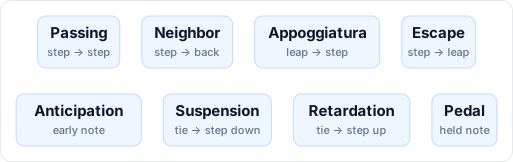
Each type is defined by how the note is approached and how it's left — by step or leap, in the same or opposite direction. The table sums up the seven types:
| Non-chord tone | Approached by | Left by |
|---|---|---|
| Passing tone | step | step, same direction |
| Neighbor tone | step | step, back (opposite direction) |
| Appoggiatura | leap | step |
| Escape tone | step | leap (opposite direction) |
| Anticipation | step/leap | repeats itself (arrives early) |
| Suspension | same note (tied) | step down |
| Retardation | same note (tied) | step up |
- A passing tone fills the gap between two chord tones a third apart.
- A neighbor tone steps away from a chord tone and returns to it (upper or lower neighbor).
- A double neighbor (neighbor group) uses both the upper and lower neighbor before returning to the starting note.
- An anticipation is common at cadences: a note of the next chord sounds early, before that chord actually arrives.
How does a suspension work?
A suspension is a non-chord tone that lands on a strong beat, playing out over three consecutive stages. A suspension is a non-chord tone that falls on a strong beat, in three stages:
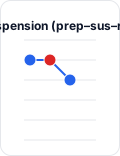
- Preparation: the note is a chord tone on the previous beat.
- Suspension: the note is held (usually tied) while the chord changes — now it is dissonant.
- Resolution: the note moves down by step to a chord tone.
Suspensions are named by the pair of intervals the suspended note and its resolution form above the bass: 9–8, 7–6, 4–3, 6–5, and 2–3 (a bass suspension). Intervals larger than an octave are reduced to these numbers.
A retardation is exactly like a suspension but resolves up by step — commonly when the leading tone (degree 7) rises to the tonic.
What is a pedal point?
It's a single sustained note held while the harmony above it keeps changing. A pedal point is a single note held through changing harmonies. It begins as a chord tone, becomes a non-chord tone as the harmony changes, then becomes a chord tone again. Pedal points are usually in the bass (the term "pedal" relates to an organ's foot pedals).
Don't confuse a slur with a tie when analyzing — review Basics of Rhythm. And see Harmonic Progression & Function for the chords these tones decorate.
Frequently asked questions
What's the difference between a passing tone and a neighbor tone? Both are approached and left by step, but a passing tone keeps going in the same direction (filling the gap between two chord tones), while a neighbor tone returns to the original chord tone.
How does a suspension differ from a retardation? Both prepare by holding a note (tied), but a suspension resolves down by step, while a retardation resolves up — often when the leading tone (degree 7) rises to the tonic.
Why is it called a "pedal point"? The term "pedal" relates to an organ's foot pedals; it's a single note (usually in the bass) held through changing chords, shifting between chord tone and non-chord tone.