The Neapolitan Chord
Updated: 2026-07-04The Neapolitan chord is a chromatic chord with a very distinctive color, often used in minor keys to lead into the dominant.
Key takeaways
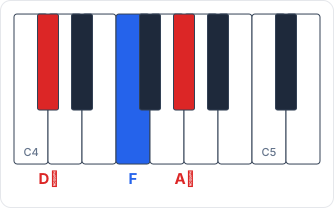
- The Neapolitan is a major triad built on ♭2, labeled ♭II (e.g. in C: D♭–F–A♭).
- It almost always appears in first inversion — ♭II⁶ (N⁶) — with scale degree 4 in the bass.
- It has pre-dominant function (like iv and ii) and typically resolves to V.
- Because it contains ♭2, it feels dramatic and was a favorite in minor keys and Romantic-era music.
How is the Neapolitan chord built?
It's a major triad built on the lowered 2nd scale degree. The Neapolitan is a major triad built on the lowered 2nd scale degree (♭2), labeled ♭II. For example (verified with tonal):
| Key | ♭2 | Neapolitan (♭II) |
|---|---|---|
| C | D♭ | D♭–F–A♭ |
| A | B♭ | B♭–D–F |
| E | F | F–A–C |
Why is it called the "Neapolitan sixth" (first inversion)?
Because it almost always appears in first inversion. The Neapolitan almost always appears in first inversion, so it's usually called the Neapolitan sixth, written ♭II⁶ (or N⁶). In that position scale degree 4 is in the bass (e.g. F in the bass in C), letting the chord connect smoothly with the surrounding harmony.
Where does the Neapolitan resolve?
It has pre-dominant function, so it heads toward the dominant harmony. The Neapolitan has pre-dominant function — like iv and ii. It typically resolves to V (or V⁷), sometimes through a cadential six-four: ♭II⁶ → V⁷ → I, or ♭II⁶ → I⁶⁴ → V⁷ → I.
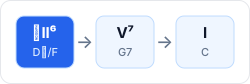
Because it contains ♭2 (a very "tense" out-of-key note), the Neapolitan feels dramatic — which is why it was a favorite in Romantic-era music and in minor keys.
See Mode Mixture and Augmented Sixth Chords for other chromatic pre-dominant chords.
Frequently asked questions
Why is the Neapolitan usually called the "Neapolitan sixth"? Because it almost always appears in first inversion (♭II⁶ or N⁶), which puts scale degree 4 in the bass and lets the chord connect smoothly with the surrounding harmony.
What does the Neapolitan resolve to? It typically resolves to V (or V⁷), sometimes through a cadential six-four: ♭II⁶ → V⁷ → I, or ♭II⁶ → I⁶⁴ → V⁷ → I.
Which note gives it its distinctive color? Scale degree ♭2 — a very "tense" out-of-key note — is what makes the chord feel dramatic, which is why it was a favorite in Romantic-era music and in minor keys.